The Distribution Data Advantage Beneath Your AI: Moving with Conviction
Distribution decisions are getting harder to make. Not because the options are unclear, but because the distribution data behind them is.
A territory gets redrawn. A coverage model gets defended. A product gets pulled. Suddenly, the report from one system doesn’t agree with the report from another.
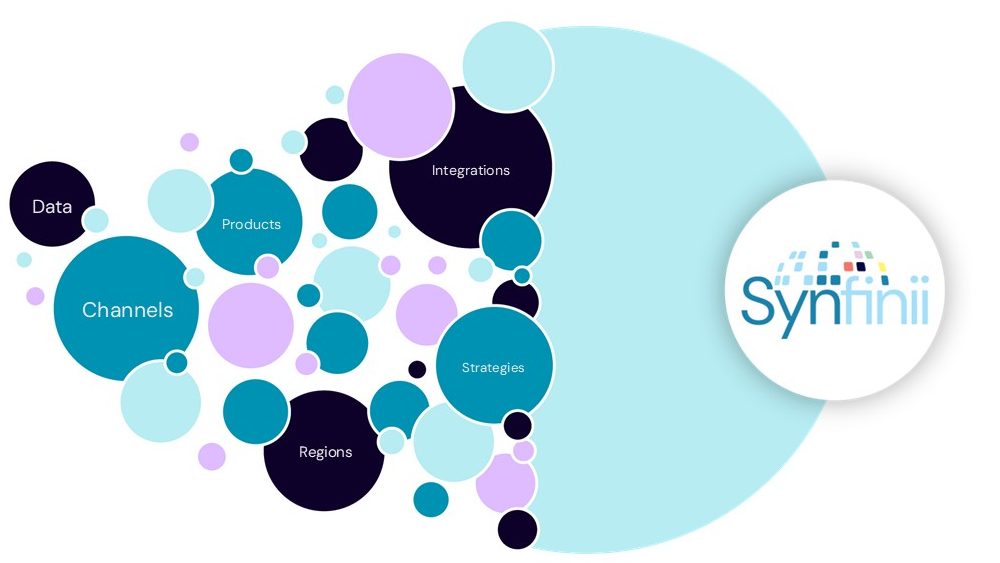
In February, I wrote about the Omni Challenge: the widening gap between how modern distribution must operate and what most technology, data, and service models were originally built to support. More channels. More regions. More products. More data and sources. All arriving faster than legacy environments were ever designed to absorb.
We said we’d work through that challenge one problem at a time and show what it takes to fix each one, and we did.
Six Problems, One Root Cause
Over the last five months, we have addressed six common problems we see in seven different posts:
- Data with Direction — turning Robert, Robert S., and Bob into one advisor you can actually act on
- Accurate AUM Reporting — one number the whole firm can stand behind
- One Client, Many Roles — total relationship value stays invisible until the profiles connect
- Who Gets Credit? and Your System Says One Owner — attribution breaks differently in institutional and intermediary, and both decide how you cover and compensate
- Speed to Strategy — analytics that answer at the pace of the market
- Product & Product Class — how many products do you actually manage, and can your systems agree on the answer?
Every one of those problems is a version of the same structural issue: the data your business runs on lives in pieces, and nothing underneath is responsible for making those pieces agree.
Most firms don’t have bad data. They have several different versions of it, some good and some bad, and no single answer they can defend.
The challenge isn’t effort. It’s agreement. And you cannot move with conviction on a number you can’t defend.
The Complexity Is Not Temporary
None of this complexity is going away.
Vendors keep changing their data. Regulations keep evolving. Firms add products, channels, markets, data sources, and technology. Every one of those moves may be the right decision for the business. And every one adds another source, another reconciliation, another place where two systems can quietly disagree.
The complexity is a byproduct of growth. Firms that stop creating complexity probably have a much bigger problem. The goal is not to reduce complexity. It’s to build something underneath it that can absorb complexity without passing the friction along.
That becomes even more important as AI changes how quickly firms can act on their data.
AI Makes the Distribution Data Foundation More Important, Not Less
AI has moved from an experiment to a requirement at firms of every size. The models are getting better, cheaper, and more widely available. Over time, access to AI itself will become less of a differentiator.
What will differentiate firms is what they are able to do with it.
AI doesn’t eliminate the need to resolve your data. It makes resolving and managing it critically important. As firms increasingly use AI to automate analysis, recommend actions, and eventually execute workflows, the quality and consistency of the data underneath those decisions becomes exponentially more consequential.
Point a model at three conflicting records for one advisor and it doesn’t necessarily know which represents the way your firm wants to view that relationship. Give it conflicting AUM calculations, attribution rules, or product definitions and it has the same problem.
AI can process those inconsistencies much faster than people can. That isn’t necessarily an advantage.
The same fragmentation that slowed down reporting and challenged analytics can now work its way into AI-driven decisions at much greater speed and scale.
That’s why the value of the governed, auditable distribution data underneath AI will continue to increase even as the models themselves become more capable.
What “Deterministic” Actually Means
This is where the deterministic advantage earns its place.
A deterministic system creates outcomes governed by defined inputs, rules, and conditions rather than inference. For a distribution team, that looks like:
- One record per advisor, not three that mostly match
- One agreed-upon AUM number, calculated the same way every time anyone asks
- Business rules defined once and applied consistently everywhere they touch
- Governance you can operate: propose then approve, preview before execute, review before update
- Lineage you can see, so every number traces back to where it came from
Reproducible. Explainable. Defensible.
But I think there is another important part of this.
Those rules aren’t generic. They reflect how your firm goes to market: how you define relationships, assign credit, organize products, cover clients, measure opportunity, and ultimately execute your distribution strategy.
A deterministic foundation makes those decisions repeatable across the business.
The objective isn’t perfect data. It’s accountable data that consistently reflects the way your firm has decided to operate. That’s the kind of foundation your people, technology, and increasingly your AI can confidently act on.
Where Synfinii Fits
Synfinii creates the deterministic operating foundation between your distribution data and everything you want to do with it.
We synthesize the data, rules, relationships, attribution, and governance that define how your firm goes to market, then make that foundation available to your people, AI, analytics, CRM, and downstream processes.
That means we augment the investments you’ve already made in data providers, warehouses, CRM, and technology rather than asking you to replace them.
The hardest part isn’t collecting more data. It’s consistently resolving and governing that data according to the way your firm actually operates. That’s what allows the individual problems we’ve discussed throughout the Omni Challenge series to be solved systematically rather than one at a time.
And increasingly, this becomes a source of competitive advantage.
Your competitors can license the same AI models. They can subscribe to many of the same data sources. What they can’t replicate is your distribution strategy: how you define relationships, assign credit, organize coverage, evaluate opportunity, and make decisions.
When that strategy is captured in a deterministic operating foundation, your distribution data becomes more than an input. It becomes a proprietary asset that helps your people, technology, and AI execute your strategy.
Moving with Conviction
The series isn’t ending. There are more problems that impact distribution efficiency and effectiveness, and we’ll keep addressing them.
But as firms head into planning season, there are two questions I’d put to any distribution leader:
1. When your team brings you a recommendation, how much of the room is spent on the decision, and how much is spent arguing about whether the numbers are right?
If it’s more than a little, that’s not just a reporting problem. It’s a foundation problem. And it will follow you into every technology and AI investment you make.
2. When you invest in AI, new data, or sales technology, how confident are you that your distribution data foundation will accelerate the value of that investment rather than slow it down?
Technology alone doesn’t create the outcome. The ability to incorporate it into the way your business operates does.
Get the distribution data foundation right and the conversation changes. Less time is spent reconciling numbers, debating definitions, and working around technology. More time is spent making decisions, executing strategy, and adapting to what comes next.
That’s the distribution data advantage: moving faster and with greater conviction toward the outcomes you’re trying to achieve.
Solving the Omni Challenge Starts with the Right Foundation.
Learn more about the Omni-challenge and how we built a deterministic system to solve it.

About Synfinii
Synfinii partners with asset managers worldwide to enable data-driven distribution by mastering data, integrating intelligence, and building solutions that help achieve your business objectives. Excellence in client service, deep industry knowledge, technical strength, and extraordinary teamwork have defined us for over 40 years.
Synfinii—our brand since September 2025—was previously known as SalesPage.